

Little Stars Day Care: What Parents Need to Know Before Enrolling
Finding the right daycare for your child means balancing trust, convenience, and quality care within your budget. If you’ve searched for “little start child care” (often a misspelling of “Little Stars”), you’re likely looking for information about specific Little Stars facilities or small, home-based childcare options that offer personalized attention in a nurturing environment.
Little Stars daycare centers operate in several locations across North America, each offering distinct programs tailored to their communities. Little Stars Daycare in Brampton is a licensed educational facility open weekdays from 7:00 am to 6:00 pm, while Little Stars Day Care in Whitby provides small-scale family daycare with a focus on individualized attention. In Kansas City, Missouri, Little Stars Home ChildCare accepts infants as young as three months and offers both monthly and weekly subsidized care options, making quality childcare more accessible for families navigating tight budgets. You can reach the Brampton location at 905-793-9200 to discuss enrollment.
These facilities share a common philosophy: providing clean, safe environments where children can learn through play and exploration. Whether you’re considering a Little Stars location near you or evaluating similar small daycares, understanding what sets quality programs apart helps you make confident decisions about your child’s early education.
This guide walks you through what Little Stars facilities offer, how to evaluate any small daycare or home-based childcare provider, and practical steps for choosing care that aligns with your family’s needs and values. Every family deserves childcare that feels like a true partnership in raising confident, curious children.
Understanding the Little Stars Day Care Model

When you picture a daycare, you might imagine a large building filled with dozens of children, multiple classrooms, and a rotating staff. Little Stars-style facilities work differently. These programs embrace a deliberately small scale, whether operating from a licensed home or a compact educational center, where every child’s name is known and individual needs don’t get lost in the crowd.
The defining feature is size. Most Little Stars settings care for a small group of children, creating an atmosphere that feels more like an extended family than an institution. You won’t find long hallways of separate age-segregated rooms. Instead, children often interact across ages in mixed groups, learning from each other in ways that mirror natural sibling dynamics.
This family-oriented approach shapes everything from daily routines to caregiver relationships. Because the same provider or small team sees your child every day, they notice subtle changes in behavior, appetite, or mood that might go undetected in larger settings. Parents frequently report feeling like partners in their child’s care rather than customers dropping off at a facility.
The educational component in these programs looks different from traditional preschool. Little Stars facilities emphasize a “learn, play, and grow” philosophy that integrates development into everyday activities. Circle time happens on living room rugs. Science lessons emerge from gardening or cooking projects. Social skills develop naturally during free play rather than through structured lessons.
This model attracts parents who value personal attention and developmental warmth over institutional resources like gymnasiums or computer labs. The trade-off is intentional: fewer children, deeper relationships, and education woven into a homelike day rather than delivered in a classroom format.
Real Little Stars Locations: What We Know
When you search for “Little Stars Day Care,” you’ll find multiple facilities across North America sharing this name, but they’re completely separate operations, not a chain or franchise. Each runs independently with its own policies, so understanding your local option requires reaching out directly.
Here’s what we know about verified Little Stars locations:
| Location | Type | Key Details | Contact |
|---|---|---|---|
| Brampton, Ontario | Licensed Educational Childcare | Hours: 7am, 6pm Monday through Friday | 905-793-9200 |
| Whitby, Ontario | Small Family Day Care | Fun, clean environment focused on learning and play | Contact info not publicly listed |
| Kansas City, Missouri | Home ChildCare | Accepts infants from 3 months; offers subsidized care (weekly/monthly) | Accepting new enrollments |
The Brampton facility operates as a licensed educational childcare center with structured hours that accommodate typical work schedules. This licensing status means it meets provincial standards for safety, staff qualifications, and programming, something you can verify through Ontario’s childcare registry.
In Whitby, the Little Stars location runs as a small family day care, emphasizing a home-like setting where children learn through play in a clean, safe space. This model typically serves fewer children than larger centers, creating that intimate environment many parents seek.
The Kansas City home childcare stands out for accepting very young infants starting at three months and offering subsidized care options. If you qualify for childcare assistance programs, this financial support can make quality care more accessible through weekly or monthly payment arrangements.
Because these facilities share only a name, you can’t assume what’s true for one applies to another. The Brampton center’s 7am opening won’t help you if you’re in Missouri, and Kansas City’s subsidy program doesn’t exist in Ontario locations. Always contact your local Little Stars directly to confirm their specific offerings, availability, and costs before making enrollment decisions.
What to Look for in Small and Home-Based Childcare
Licensing and Safety Standards
Licensing protects your child by ensuring a daycare meets minimum safety, health, and operational standards set by your state or province. When a facility like Little Stars Daycare in Brampton holds a licensed, educational childcare designation, it means the program has passed inspections covering everything from fire safety and building codes to caregiver background checks and child-to-staff ratios. Without licensing, there’s no third-party oversight verifying that basic protections are in place.
To verify credentials, start by checking your local childcare licensing database, most states and provinces maintain searchable online registries that show a facility’s current status, inspection history, and any violations. During your tour, ask to see the license displayed on-site and confirm the expiration date. Don’t hesitate to request inspection reports or ask about the last visit from licensing authorities. Our child care centre guide walks through other red flags to watch for during facility evaluations.
Licensed care doesn’t guarantee excellence, but it does establish a baseline. You’re looking for a provider who not only meets minimum requirements but exceeds them with clean facilities, transparent policies, and caregivers who genuinely engage with children throughout the day.
Educational Philosophy and Daily Activities
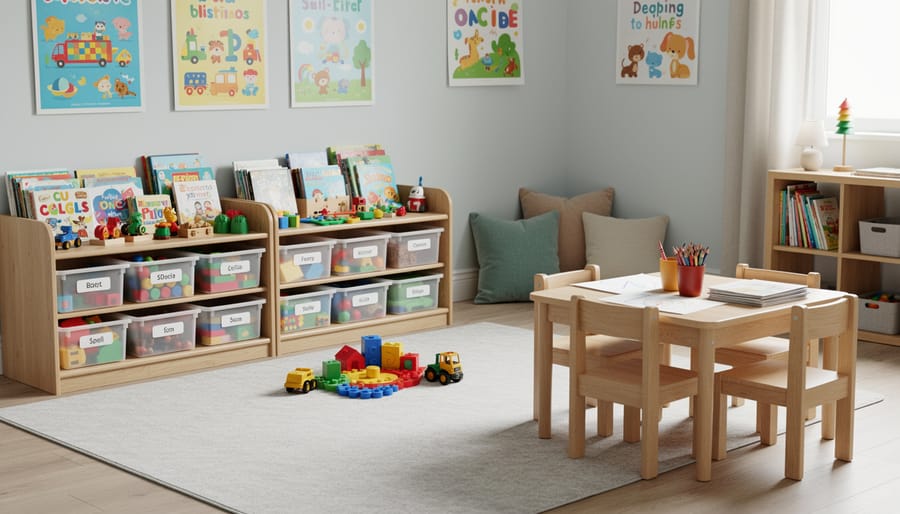
When a daycare promises children will “learn, play, and grow,” you need to look past the slogan and see what actually happens during the day. Genuine learning at this age doesn’t mean worksheets or formal lessons, it means intentional activities that build skills through exploration and interaction.
Ask the provider to walk you through a typical day. Quality programs have structure with variety: circle time for songs and stories, hands-on activities that develop fine motor skills (think play dough, building blocks, simple art projects), outdoor play for gross motor development, and quiet time for rest. The activities should match your child’s developmental stage. Infants need safe floor time to practice rolling and reaching. Toddlers benefit from sensory bins, stacking toys, and pretend play. Preschoolers thrive with activities that introduce early literacy, counting, and social problem-solving.
Watch how caregivers interact during play. Do they ask open-ended questions? Do they narrate what children are doing to build vocabulary? Or do they just supervise from a distance? The difference between genuine learning and simple babysitting is an engaged caregiver who sees everyday moments, snack time, cleanup, playground visits, as teaching opportunities.
Check if there’s a visible daily schedule posted and ask how flexible it is for individual children’s needs. A balance of structured activities and free play shows thoughtful planning. If the answer is vague or the day seems to lack any rhythm, that’s a concern worth noting.
Questions to Ask Before You Enroll
Choosing the right daycare means asking the right questions upfront. A facility tour gives you valuable time to dig into the details that matter most for your child’s daily experience and your family’s budget.
Start with these essential questions, organized by priority:
- What are your operating hours, and do you offer early drop-off or late pickup? Some facilities, like the Brampton Little Stars location, operate from 7:00 am to 6:00 pm, but hours vary widely. Confirm whether the schedule fits your work commute and what happens if you’re occasionally running late.
- What is your caregiver-to-child ratio, and how does it change by age group? Smaller ratios mean more individual attention. Ask specifically about the ratio for your child’s age and whether it’s maintained throughout the day, including during transitions and outdoor time.
- Can you describe a typical daily schedule and your educational approach? You want specifics, not just “we play and learn.” Ask about structured activities, free play time, outdoor access, nap schedules, and how they adapt programming for different developmental stages.
- What are your tuition rates, and do you accept subsidized care? Get clear numbers for weekly or monthly costs. Some providers, like the Kansas City Little Stars location, offer subsidized care options that can significantly reduce your expenses. Ask how to register for child care subsidies in your area if cost is a concern.
- What’s your sick child policy and medication administration protocol? Know the temperature threshold for sending children home, how contagious illness exposures are handled, and whether they’ll give prescribed medication during the day.
- Do you provide meals and snacks, or should parents pack food? If meals are included, ask about the menu, accommodation for allergies or dietary restrictions, and whether there’s an extra charge.
Don’t rush through your visit. Take note of how staff interact with children, the cleanliness of spaces, and whether the environment feels calm or chaotic. Trust your gut, if something feels off during the tour, it probably won’t improve after enrollment. Ask for references from current families, and follow up with at least two before making your decision.
Making Small Childcare Work for Your Budget
Finding quality childcare that fits your budget requires some research, but small daycares often offer more flexibility than you might expect. The first step is getting clear on actual costs, when you call or visit, ask whether they charge weekly or monthly, what hours that rate covers, and what’s not included (like meals, supplies, or field trips). Some home-based providers offer both options. For example, Little Stars Home ChildCare in Kansas City provides both monthly and weekly payment structures, which can help families manage cash flow differently depending on their paychecks.
Don’t assume subsidized care isn’t available just because it’s a smaller setting. Many home childcare providers accept state subsidy programs, making quality care accessible to families who qualify. The Kansas City Little Stars location specifically offers subsidized care, demonstrating that these smaller programs participate in assistance programs just like larger centers. Contact your state’s childcare assistance office to learn what you qualify for and get a list of participating providers in your area.
When comparing costs, look beyond the sticker price. A slightly higher weekly rate might actually save you money if it includes meals, diapers, and educational materials that you’d otherwise purchase separately. Some small daycares also offer sibling discounts or flexible part-time schedules that larger centers don’t, which can significantly reduce your overall childcare spending.
If a program feels right but stretches your budget, ask directly whether they offer payment plans, sibling rates, or reduced fees for shorter hours. Many small providers have more flexibility to work with families than corporate centers with fixed pricing structures. The worst they can say is no, and you might discover options you didn’t know existed.
When Little Stars (or Similar Small Daycares) Might Be Right for Your Family
Small daycares and home-based settings work beautifully for some families but present real challenges for others. The key is matching your child’s temperament and your family’s practical needs to what these intimate environments offer.
These settings shine when your child thrives with consistent routines and familiar faces. If your little one takes time to warm up to new people or feels overwhelmed in busy environments, the smaller group size means they’ll see the same caregivers and playmates every day. That predictability helps anxious children settle in faster and build genuine relationships. The individualized attention also means caregivers notice subtle changes in mood or development that might get missed in larger centers with rotating staff.
Pros
- Lower child-to-caregiver ratios mean more one-on-one attention throughout the day.
- Home environments often feel less institutional and more comfortable for young children.
- Smaller groups reduce exposure to illness and create calmer, quieter spaces.
- Mixed-age settings help children learn from older kids and develop empathy with younger ones.
Cons
- Limited hours like 7am to 6pm may not accommodate shift work or long commutes.
- Smaller capacity means fewer enrollment spots and potentially long waitlists.
- Backup care options can be scarce if the provider is sick or takes vacation.
- Fewer staff means less coverage for breaks and less diverse teaching approaches.
The intimate setting becomes a limitation when you need flexibility. Families with unpredictable work schedules or those exploring options through programs like the home child care pilot should confirm whether the facility can accommodate varying drop-off times or occasional extended days. Small providers typically have stricter capacity limits, so if your child needs full-time care starting at a specific date, you’ll want to secure your spot well in advance.
Consider your child’s social needs too. Some kids crave the energy and variety of larger groups, while others flourish with three or four consistent friends. Visit during active hours to see whether the environment energizes or soothes your child.

Choosing childcare is one of the most personal decisions you’ll make as a parent, and there’s no single right answer for every family. Whether you’re considering a Little Stars location near you or exploring other small daycare options, the key is doing your homework and listening to your gut.
Start by verifying that any facility you’re considering holds current licensing, call your state or provincial childcare licensing office if you need to confirm. Then schedule in-person visits, ideally during program hours when you can see caregivers and children interacting. Pay attention to how the environment feels, how staff respond to children’s needs, and whether the daily routine matches what you’re looking for.
Ask all your questions, even the ones that feel awkward. A quality caregiver will welcome your thoroughness because it shows you’re invested in your child’s wellbeing. Trust yourself to recognize when something feels off or when it feels exactly right.
The childcare setting you choose will become part of your family’s daily life and a place where you’ll strengthen the bond with your child through shared routines and experiences. Take your time, gather information, and know that you’re capable of making the best choice for your unique situation.